Claudel, Camille (1864-1943)
L’Abandon (Abandonment)
c.1886
Bronze, 42.3 x 39.1 x 20.5 cm
Musée Camille Claudel, Nogent-sur-Seine
© Musée Camille Claudel, photo by Marco Illuminati
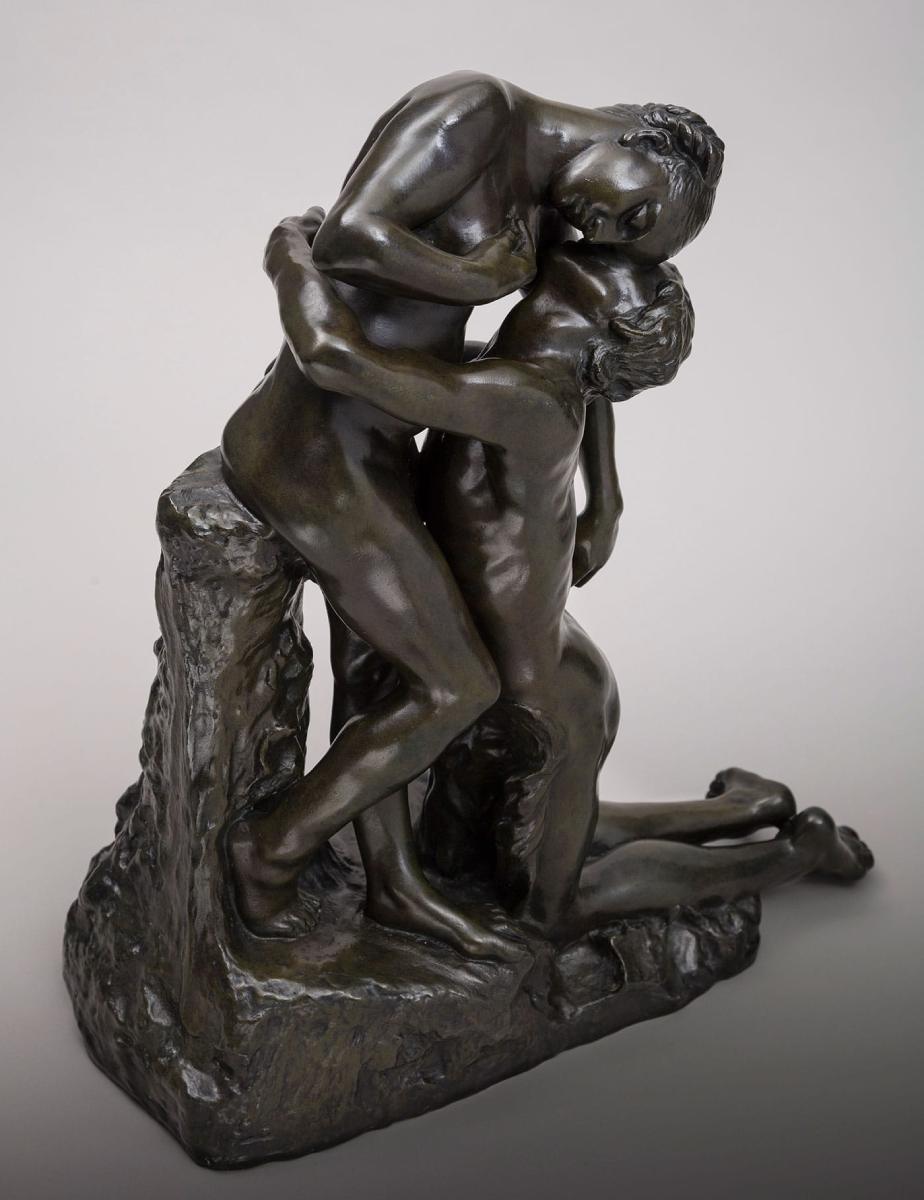
This bronze sculpture is a small model produced in 1905 by the foundryman and collector Eugène Blot, based on a group created by Camille Claudel between 1886 and 1888, while she was working in Auguste Rodin‘s studio. This version was slightly revised compared to the larger-than-life plaster cast exhibited in 1888 at the Salon des Artistes Français under the title Sakountala, which received an honorable mention. The man is kneeling, supporting the young woman who is standing. She folds her right arm to cover her breast and leans on her left leg. The rest of her body relaxes; the woman surrenders completely to the man’s embrace. Their faces are close; he seems to be whispering in her ear or about to kiss her. The primary source, as indicated by the plaster cast’s title, is a drama written in the 4th or 5th century by the Hindu poet Kalidasa: during a hunt, King Duchmanta meets the young Sakuntala. They fall instantly in love, but the king must leave her. As a token of his love, he gives her a ring so she can be recognized. However, victims of revenge, Sakuntala has the ring stolen, and Duchmanta forgets his fiancée. He eventually recovers his memory thanks to a fisherman who brings him the ring, found inside a fish. Some doubt remains about which episode inspired Camille Claudel. The artist may have depicted the meeting of the two lovers. It is also possible to see in this sculpture the moment of their reunion, as the lover begs Sakuntala’s forgiveness. In any case, this sculpture transcends the mere transcription of a moment in a story. The title of the bronze edition, “The Abandonment,” is now allegorical, highlighting the importance given to the posture of the trusting lover, surrendering herself into the arms of her beloved. Camille Claudel explores the bond of love, its nuances and subtleties. The couple’s embrace reveals the fervor of their love. In “The Abandonment,” their bodies barely touch, underscoring the delicacy of their feelings. (MCC)