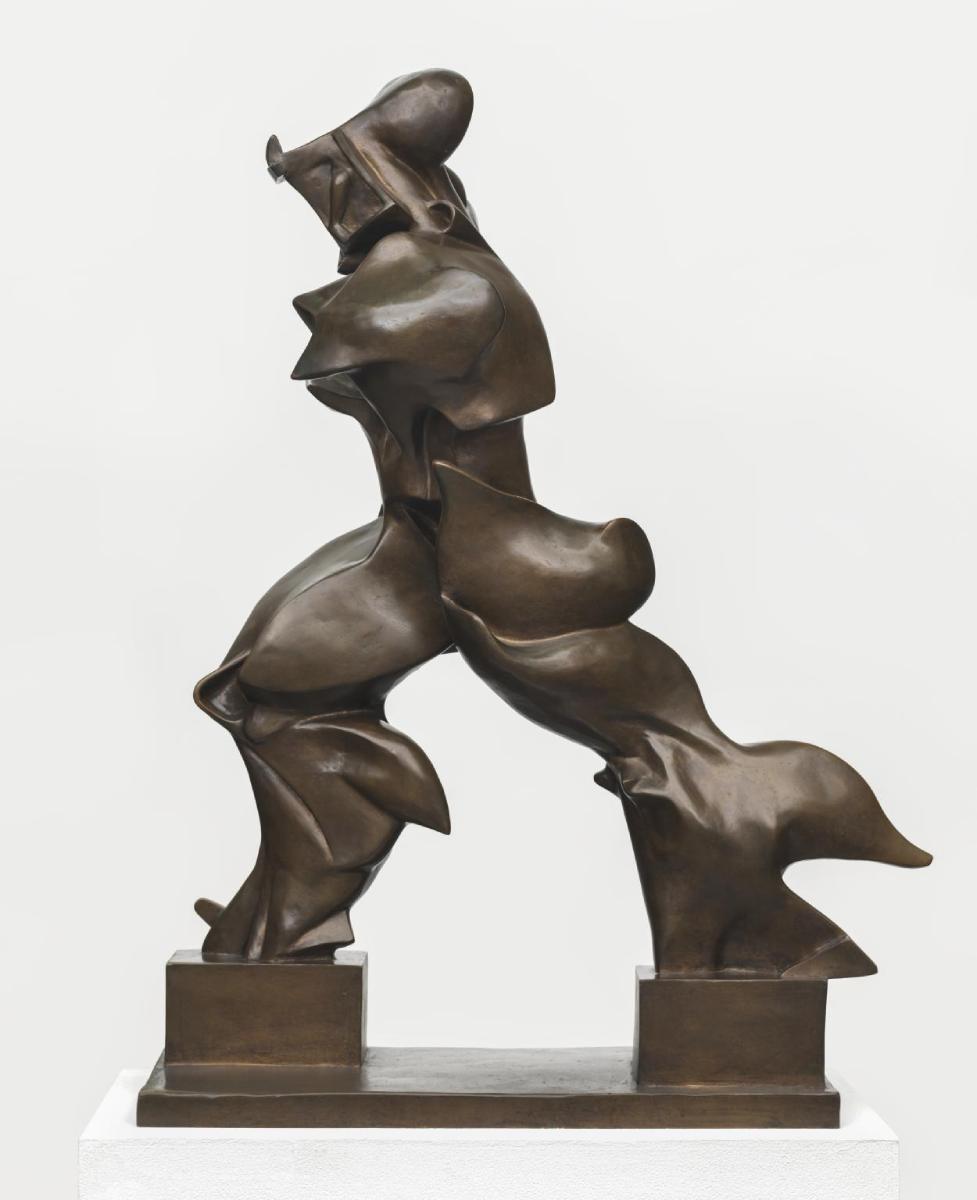
Boccioni, Umberto (1882-1916)
Forme uniche della continuità nello spazio (Unique Forms of Continuity in Space)
1913, cast 1972
Bronze, 117.5 × 87.6 × 36.8 cm
Tate Britain, London
In the early years of the twentieth century, industrialisation swept across Italy. The futurist movement was founded by writers and artists like Umberto Boccioni, who enthused about new inventions such as cars and electricity. In Unique Forms of Continuity in Space, the figure is aerodynamically deformed by speed. Boccioni exaggerated the body’s dynamism so that it embodied the urge towards progress. The sculpture may reflect ideas of the mechanised body that appeared in futurist writings, as well as the ‘superman’ envisaged by the philosopher Friedrich Nietzsche. (Tate)
Compare:
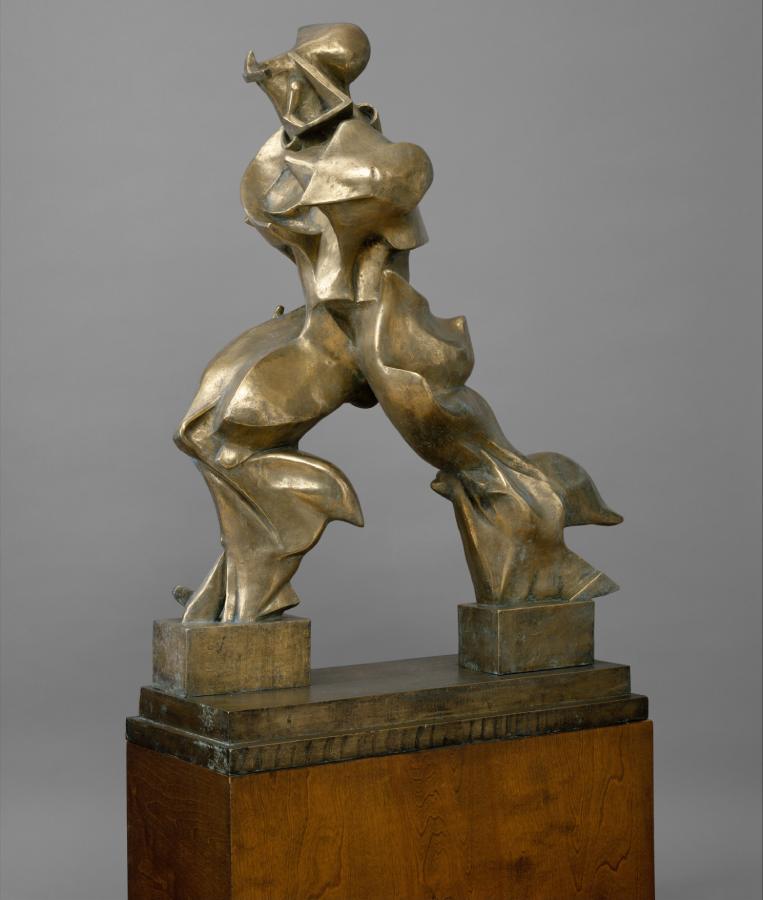 Boccioni, Umberto (1882-1916)
Forme uniche della continuità nello spazio
1913, cast 1950
Metropolitan Museum of Art, New York