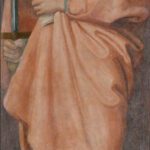
Carracci, Annibale (1560-1609) San Paolo (Saint Paul) 1604–1606 Fresco transferred to canvas Museu Nacional d’Art de Catalunya, Barcelona Mural Paintings from the Herrera Chapel.
Carracci, Annibale (1560-1609) San Paolo (Saint Paul) 1604–1606 Fresco transferred to canvas Museu Nacional d’Art de Catalunya, Barcelona Mural Paintings from the Herrera Chapel.
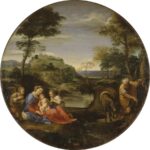
Carracci, Annibale (1560-1609) Riposo nella fuga in Egitto (Rest on the Flight into Egypt) c.1604 Oil on canvas, diameter 82.5 cm Hermitage Museum, Saint Petersburg
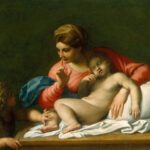
Carracci, Annibale (1560-1609) Madonna del Silenzio (Madonna and Sleeping Child with the Infant St John the Baptist) c.1599–1600 Oil on canvas, 51.2 x 68.4 cm Royal Collection, Hampton Court Palace, London

Carracci, Annibale (1560-1609) Paesaggio con la Fuga in Egitto (Landscape with the Flight into Egypt) c.1604 Oil on canvas, 122 x 230 cm Galleria Doria Pamphilj, Roma It is the leading element of the so-called “Aldobrandini Lunettes”, thanks to which the…
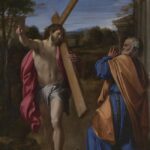
Carracci, Annibale (1560-1609) Domine, quo vadis? (Christ appearing to Saint Peter on the Appian Way) 1601–1602 Oil on wood, 77.4 x 56.3 cm National Gallery, London Saint Peter fled Rome after Christ’s crucifixion, scared that he too would be executed by…
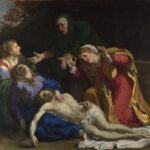
Carracci, Annibale (1560-1609) Pietà con le tre Marie (The Dead Christ Mourned, The Three Maries) c.1604 Oil on canvas, 92.8 x 103.2 cm National Gallery, London This is perhaps the most poignant image in the National Gallery’s collection of the pietà…
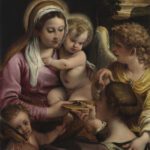
Carracci, Annibale (1560-1609) Madonna col Bambino, Santa Lucia e San Giovannino (The Madonna and Child with Saint Lucy and the Young Saint John the Baptist) c.1587–1588 Oil on panel, 78.8 x 62.7 cm Private collection
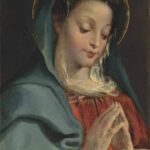
Carracci, Annibale (1560-1609) Vergine orante (The Virgin at prayer) c.1582–1585 Oil on canvas, 62.3 x 41.6 cm Private collection
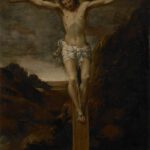
Carracci, Annibale (1560-1609) Crocifissione (The Crucifixion) c.1587–1588 Oil on canvas laid on panel, 81.5 × 61.5 cm Yale University Art Gallery, New Haven
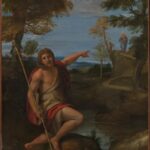
Carracci, Annibale (1560-1609) San Giovanni Battista rende testimonianza (Saint John the Baptist Bearing Witness) c.1600 Oil on copper, 54.3 x 43.5 cm Metropolitan Museum of Art, New York Annibale launched the vogue for landscapes in which nature is transformed by the…