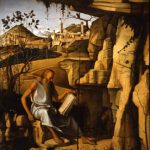
Bellini, Giovanni (c.1430-1516) San Girolamo nel deserto (Saint Jerome in the Wilderness) c.1480 Oil on panel, 151.7 x 113.7 cm Galleria degli Uffizi, Firenze
Bellini, Giovanni (c.1430-1516) San Girolamo nel deserto (Saint Jerome in the Wilderness) c.1480 Oil on panel, 151.7 x 113.7 cm Galleria degli Uffizi, Firenze
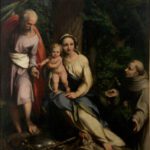
Correggio (c.1489-1534) Riposo durante la fuga in Egitto con San Francesco (Rest on the flight into Egypt with St. Francis) c.1520 Oil on canvas, 120 x 105 cm Galleria degli Uffizi, Firenze
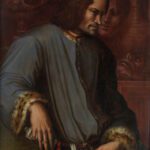
Vasari, Giorgio (1511-1574) Ritratto di Lorenzo il Magnifico (Portrait of Lorenzo il Magnifico) c.1533–1534 Oil on panel, 90 x 72 cm Galleria degli Uffizi, Firenze See also: • Lorenzo I de’ Medici (1449-1492)
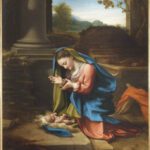
Correggio (c.1489-1534) Madonna in adorazione di Gesù Bambino (Madonna in Adoration of the Child Jesus) 1518–1520 Oil on canvas, 81 x 77 cm Galleria degli Uffizi, Firenze
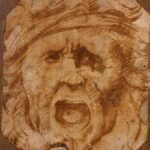
Mantegna, Andrea (c.1431-1506) Autoritratto in aspetto di Medusa (Self-portrait as Medusa) post 1474 Pen, brush, ink on paper, 124 x 99 mm Galleria degli Uffizi, Firenze In the late 18th century, this work was recorded as “Mask in pen” in the…
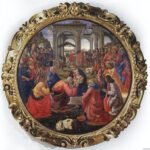
Ghirlandaio, Domenico (1448-1494) Adorazione dei Magi (Adoration of the Magi) 1487 Tempera on panel, diameter 171.5 cm Galleria degli Uffizi, Firenze
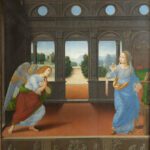
Lorenzo di Credi (c.1459-1537) Annunciazione (The Annunciation) 1480–1490 Tempera on panel, 88 x 71 cm Galleria degli Uffizi, Firenze
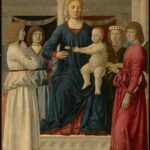
Piero della Francesca (c.1416-1492) Madonna col Bambino e quattro angeli (Virgin and Child Enthroned with Four Angels) c.1460–1470 Oil on panel, transferred to fabric on panel, 107.8 x 78.4 cm Clark Art Institute, Williamstown
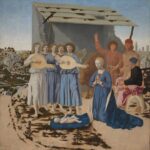
Piero della Francesca (c.1416-1492) Natività (The Nativity) early 1480s Oil on poplar, 124.4 x 122.6 cm National Gallery, London Piero della Francesca depicted Christ’s Nativity as a miraculous vision materialising on top of a hill near his hometown in rural Tuscany. He…
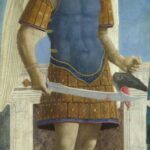
Piero della Francesca (c.1416-1492) San Michele Arcangelo (Saint Michael the Archangel) completed 1469 Oil on poplar, 133 x 59.5 cm National Gallery, London The Archangel Michael led an army of angels to battle against the devil and cast him down from…