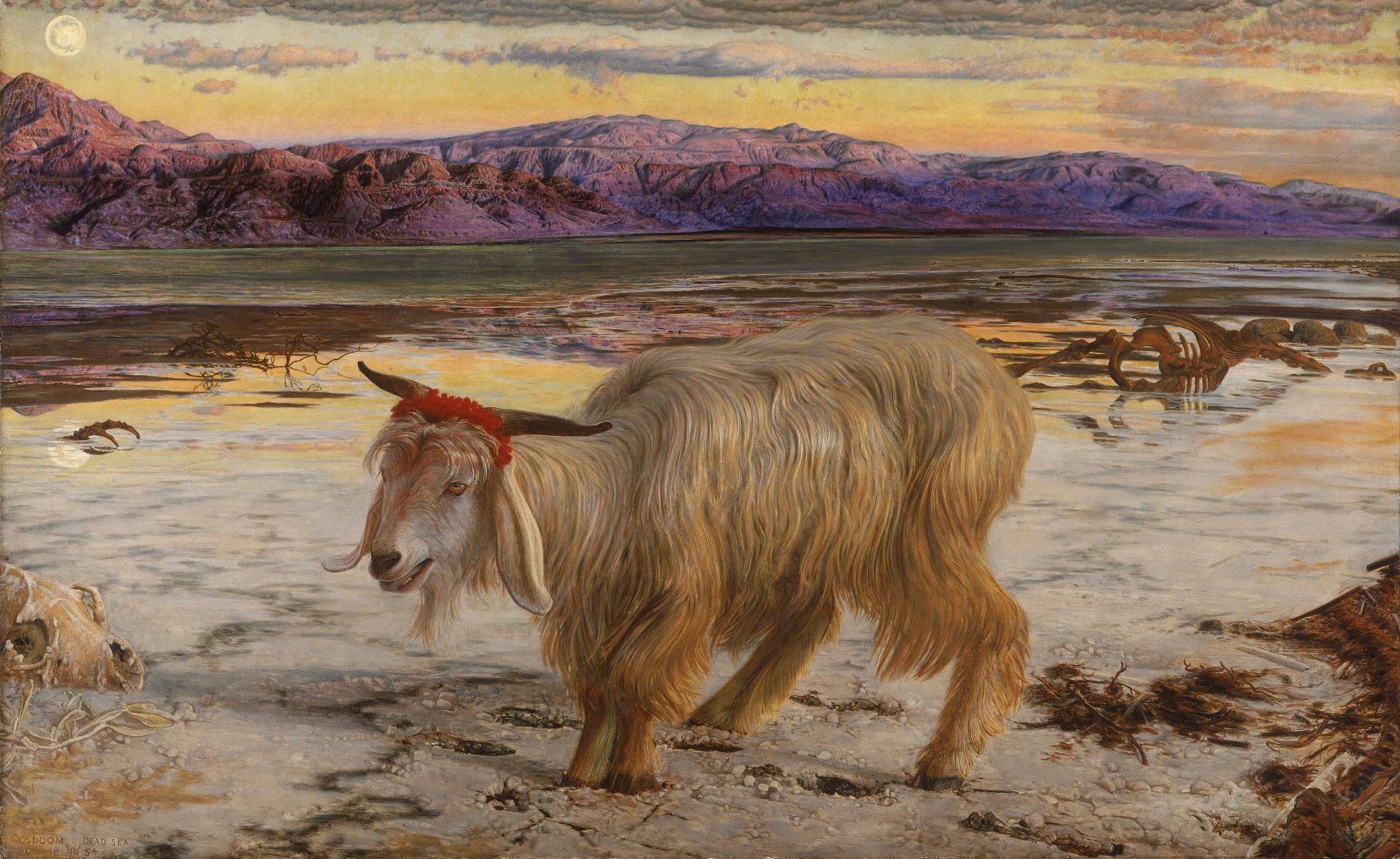
Hunt, William Holman (1827-1910)
The Scapegoat
1854–1856
Oil on canvas, 86 x 140 cm
Lady Lever Art Gallery, Port Sunlight
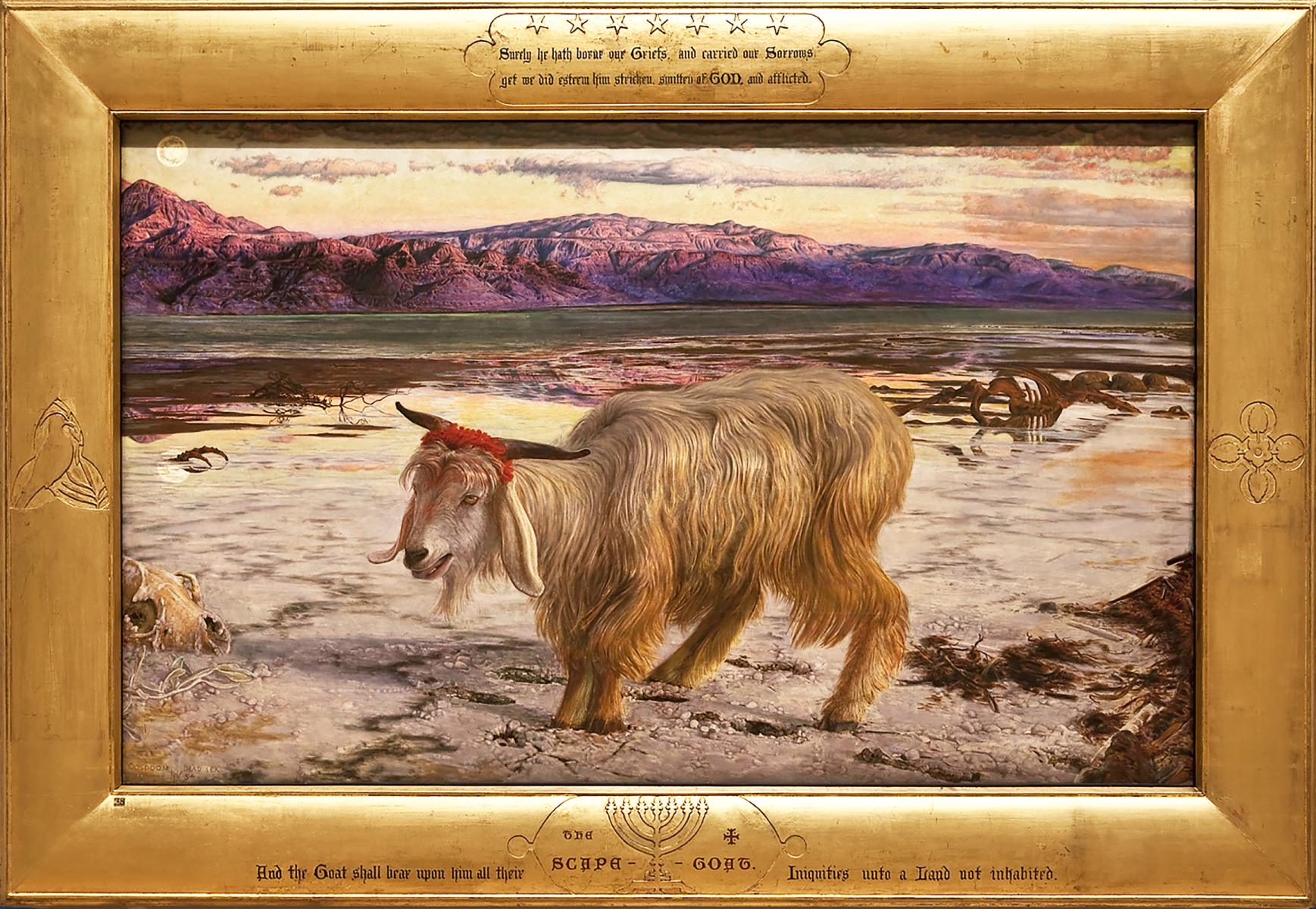
Hunt designed the frame himself to complement the painting.
William Holman Hunt‘s ‘The Scapegoat’ is one of the most popular paintings at the Lady Lever Art Gallery, attracting many visitors to see it hanging in the main hall. While the Pre-Raphaelites were known for depicting striking women in historical narrative scenes, this painting instead focuses on a goat, which stares out at the viewer from a vibrant yet ethereal landscape. But how did the painting come about and how did the artist create this arresting scene?
In 1854 Hunt travelled to the Holy Land for the first time and stayed for almost two years. He was intent on finding authentic backgrounds for his biblical paintings, fuelled by the Pre-Raphaelite Brotherhood’s principles of ‘truth to nature’ and his own desire to revitalise Christian art.
‘The Scapegoat’ was Hunt‘s first major painting made during this time. He came up with the idea while carrying out research for his painting ‘The Finding of the Saviour in the Temple’, which is now at Sudley House.
He read about an Old Testament ritual which took place each year on the Day of Atonement. The High Priest of the Temple of Jerusalem would cast a goat out into the wilderness, carrying with it the sins of the congregation. It was believed that if these sins were forgiven then the scarlet cloth tied between its horns would turn white.
For Hunt the animal was a symbol of Christ carrying the sins of the world, with the scarlet cloth around its horns representing the crown of thorns. (Lady Lever Art Gallery)
Compare:
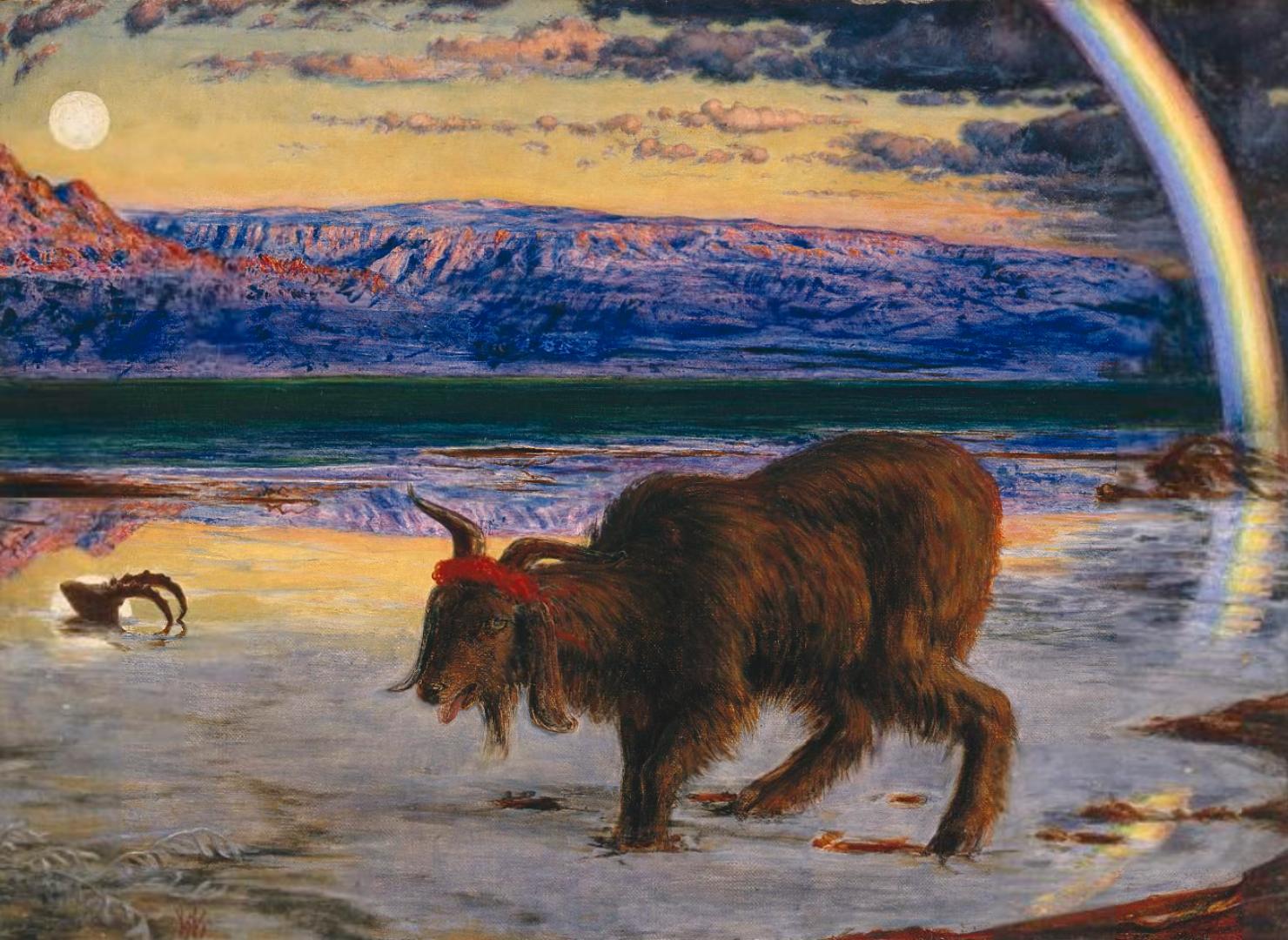 Hunt, William Holman (1827-1910)
The Scapegoat
1854–1855
Manchester Art Gallery, Manchester