Claudel, Camille (1864-1943)
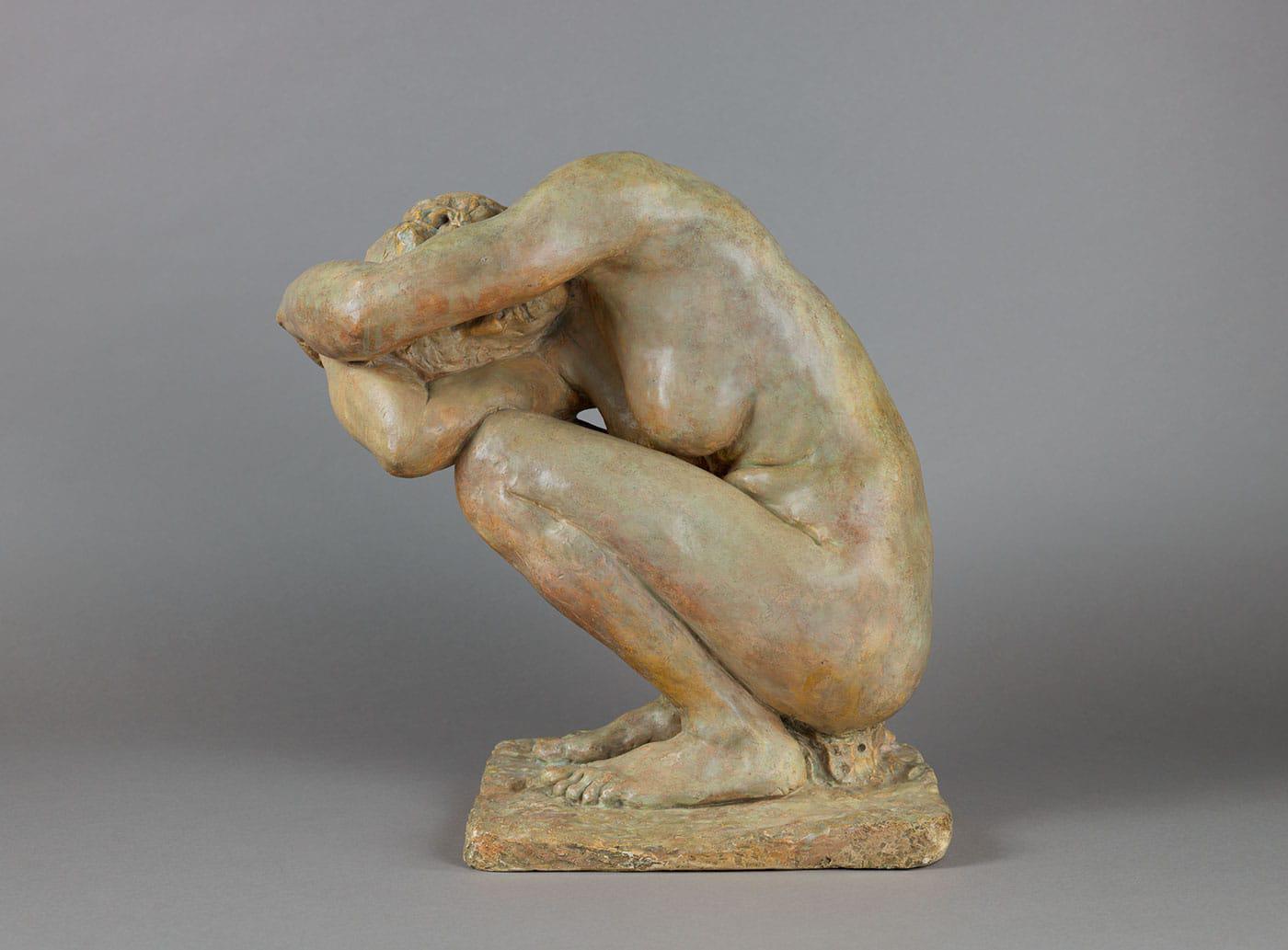
Femme accroupie (Crouching woman)
c.1884–1885
Patinated plaster, 37.5 x 24.5 x 38.5 cm
Musée Camille Claudel, Nogent-sur-Seine
© Musée Camille Claudel, photo by Marco Illuminati
Crouching Woman was created around 1884–1885 by Camille Claudel, then in her early twenties. The plaster sculpture is patinated in a flesh tone with nuanced bluish-green highlights. It depicts a voluptuous woman, crouching and curled up. Her intricately braided chignon can momentarily capture the viewer’s attention and inspire admiration.
Adults and children alike spontaneously try to see the face hidden in her arms, visible from only one viewpoint. Even before describing the work, they attribute feelings like sadness, fear, and shame to this woman. According to them, she is hiding to protect herself.
Innocent children attempt to pose. They crouch and hide. But the posture is not so easy. Both hands are clasped above the head. The parallel arms enclose the face. Observing this rounded back, with its prominent spine, allows one to grasp its full complexity. The figure is bent over, twisting. The pose is actually very difficult to imitate, especially since the feet rest entirely on the sculpture’s narrow base. Another attempt, closer to the posture of the Crouching Woman, creates imbalances. A fall is imminent. Camille Claudel undoubtedly enjoyed testing the balance of her figures.
The twist and imbalance transcend mere technical prowess and seem to bear witness to extreme inner anguish. In 1898, art critic Mathias Morhardt captured in a text all the emotion expressed in the work: “This study is an admirable piece of nude. The arms, the back, the belly possess a suppleness that suggests life itself.” (MCC)