Bellini, Giovanni (c.1430-1516)
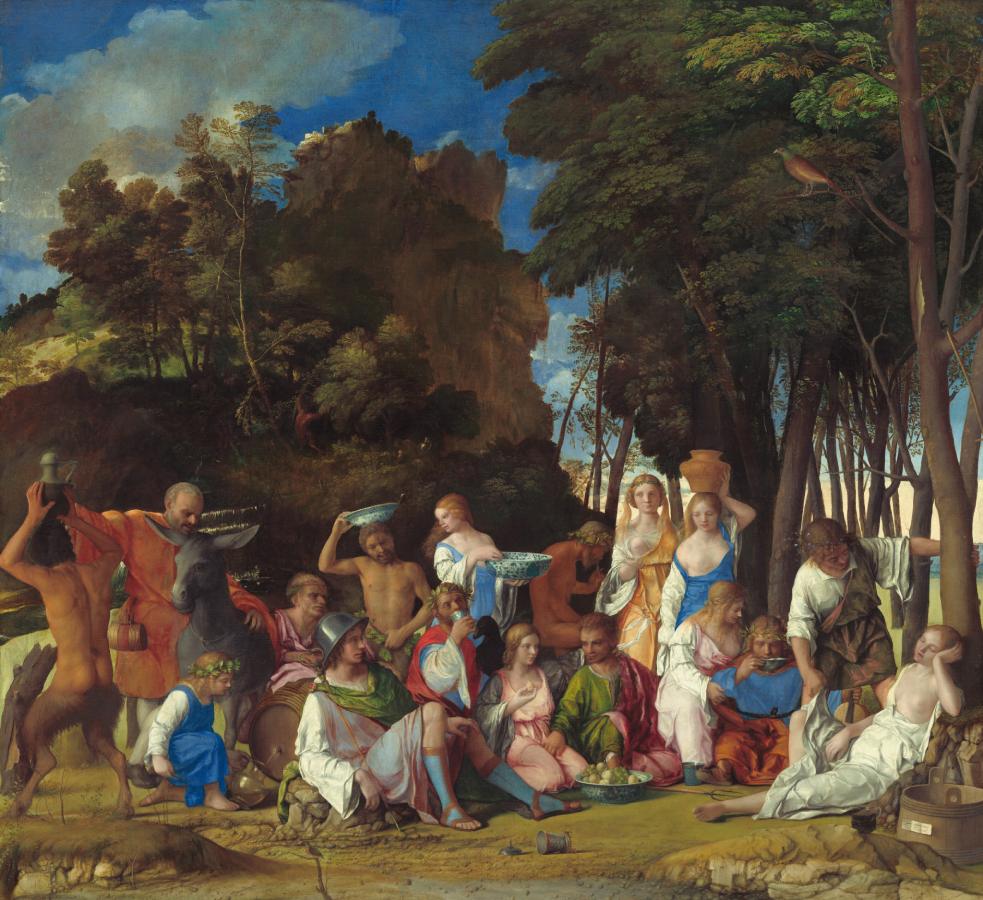
Il festino degli dei (The Feast of the Gods)
1514
Oil on canvas, 170 x 188 cm
National Gallery of Art, Washington
Completed by his disciple, Titian, in 1529
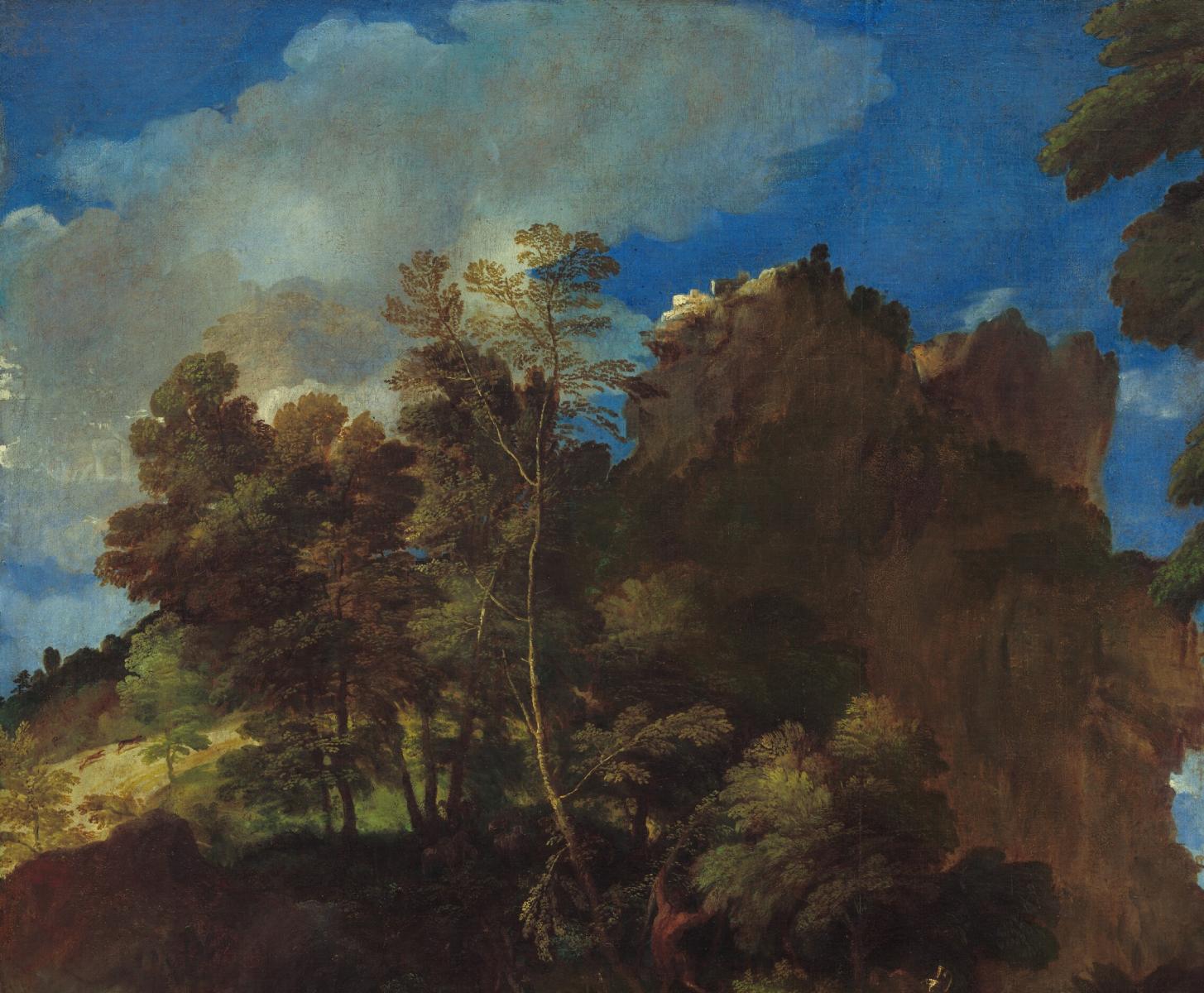
Titian‘s landscape to the left of the painting.
Six women, eight men, two satyrs, and one child gather in pairs and trios in a loose row that spans the width of this nearly square painting. They are set within a landscape with craggy rocks, cliffs, and trees. Most of the people face us, and the men, women, and child have pale skin. The two satyrs have men’s torsos and furry goat’s legs, and they have darker, olive complexions. Most of the men wear voluminous, knee-length togas wrapped in short robes in shades of white, topaz blue, grass green, coral orange, or rose pink. Most of the women wear long, dress-like garments in tones of shell pink, apricot orange, or lapis blue over white sleeves. For all but one woman, their garments have fallen off one shoulder to reveal a round, firm breast. Several objects are strewn on the rocky, dirt ground in front of the group, including a wide, wooden bucket with a piece of paper affixed to its front to our right, a glass goblet, a pitchfork, a large blue and white ceramic dish filled with grapes and small yellow fruits, and an overturned cup near the center. Cliff-like, craggy rocks rise steeply behind the group to our left, filling much of the sky opposite a tall grove of leafy, dark green trees to our right. A few puffy white clouds float across the vivid blue sky. The slip of paper on the barrel has been inscribed, “joannes bellinus venetus p MDXIIII.”
No one parties like the gods—at least not like the mythological ones in this painting, a collaboration by the Renaissance artists Giovanni Bellini and Titian. The picture was the first in a series of bacchanals commissioned by Duke Alfonso d’Este to decorate the camerino d’alabastro (alabaster study) of his castle in Ferrara. It’s based on a scene from Ovid’s Fasti, a poem in Latin. At this banquet, Jupiter, Neptune, and Apollo feast in the woods as nymphs and satyrs attend to their every desire. Priapus, the god of fertility, inappropriately lifts the dress of the sleeping nymph Lotis. Dark trees provide both privacy to the scandalous affair and depth to the composition. (NGA)
See also:
• Borgia, Lucrezia (1480-1519) | Ovid (43 BC-17/18 AD)