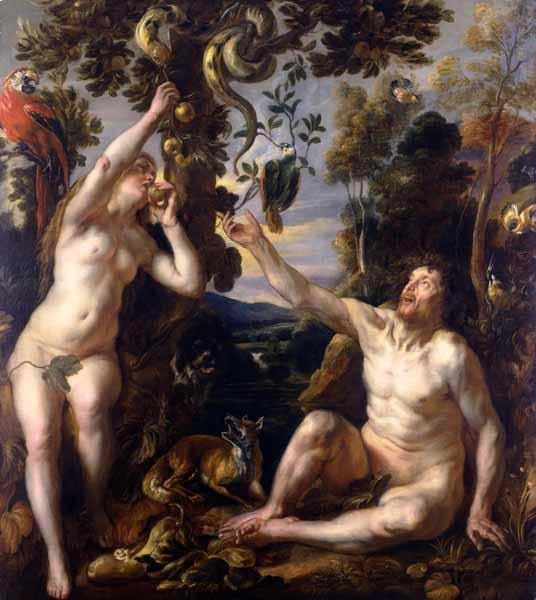
Jordaens, Jacob (1593-1678)
Adam and Eve
1642
Oil on canvas, 203.2 x 182.9 cm
Toledo Museum of Art, Toledo
The leading 17th-century Flemish painter after the deaths of Peter Paul Rubens and Anthony van Dyck, Jacob Jordaens distinguished himself from his famous peers by the earthy naturalism of his paintings. In his version of the Fall of Man—Adam and Eve disobeying God by eating from the Tree of the Knowledge of Good and Evil—he suggests the sensuous, even bestial nature of Adam and Eve in their sinful state. Instead of being seduced by Eve to eat the fruit, here Adam is a willing participant, reaching greedily for his share. His eager, open-mouthed expression is echoed by the fox next to him, underlining the animalistic quality of sin. Eve, too, seems hardly to have needed persuading by the treacherous serpent. (TAM)
Compare:
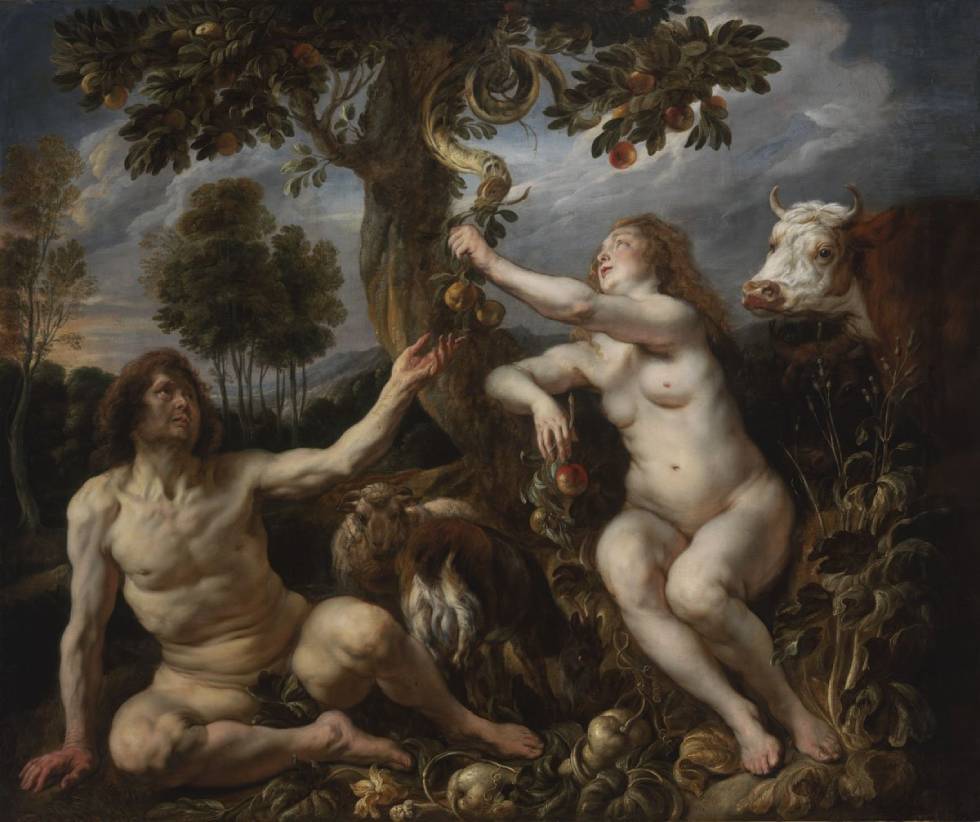 Jordaens, Jacob (1593-1678)
Adam and Eve
1640s
Museum of Fine Arts, Budapest